
Maintaining productivity throughout the day is not always easy. Work responsibilities, personal goals, notifications, social media, meetings, and everyday distractions can make it difficult to stay focused. At the same time, productivity is not only about completing more tasks. Energy, mindfulness, breaks, goal tracking, and healthy routines can also influence how effectively a person manages the day.
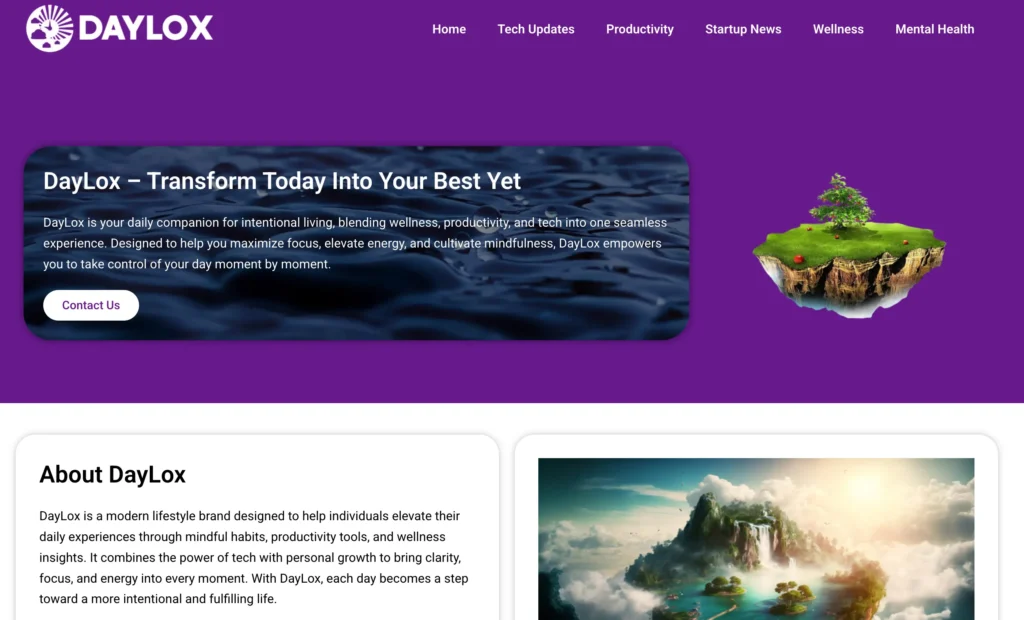
DayLox is positioned as a digital lifestyle platform designed to help users become more intentional about their daily routines. The platform combines productivity concepts with wellness, mindfulness, focus, motivation, and personal growth. Its website describes DayLox as a daily companion that helps users improve focus, energy, clarity, and purposeful living.
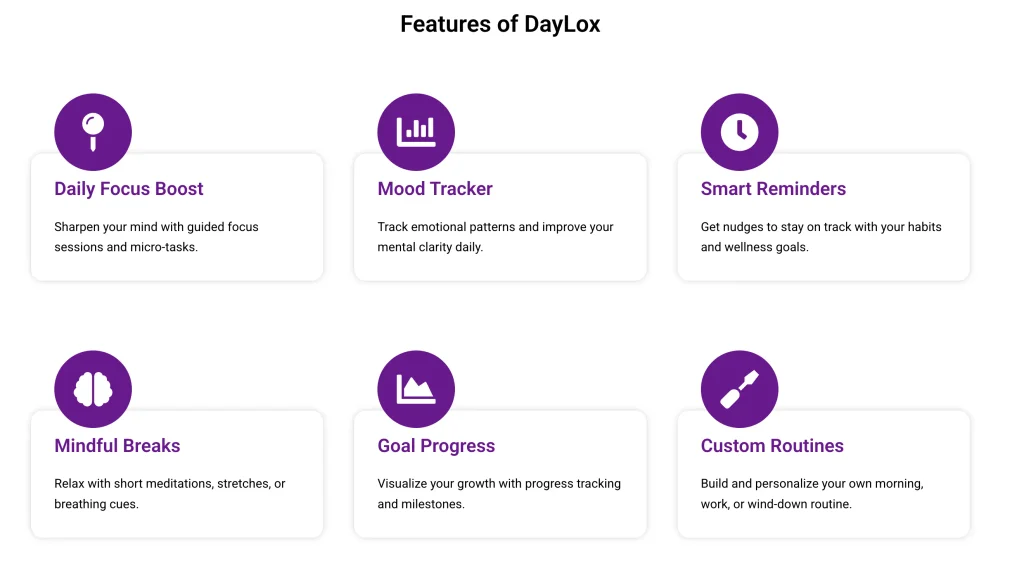
The platform highlights features such as daily focus sessions, micro-tasks, mood tracking, smart reminders, mindful breaks, goal progress, and customizable routines. These features are designed around a simple idea: small improvements repeated consistently can contribute to better daily habits.
This detailed review explains what DayLox is, what it offers, how its features can be useful, its potential strengths and limitations, who may benefit from it, and what users should consider before making it part of their daily routine.
What Is DayLox?
DayLox is a lifestyle and productivity platform focused on intentional living, personal development, mindfulness, and daily productivity.
Rather than focusing exclusively on traditional task management, DayLox combines several areas of personal improvement. Its website presents the platform around concepts such as productivity, motivation, focus, clarity, energy, mindfulness, purpose, growth, and transformation.
The basic philosophy is that productivity should not simply mean completing a long list of tasks. A productive day can also involve maintaining focus, taking appropriate breaks, understanding personal patterns, setting realistic goals, and developing routines that support long-term progress.
This makes DayLox potentially relevant to several different audiences, including:
- Professionals
- Students
- Freelancers
- Entrepreneurs
- Remote workers
- Content creators
- People working on personal goals
- Users interested in mindfulness and wellness
- Individuals trying to establish better daily habits
The platform also publishes content covering productivity, technology, wellness, mental health, and startup-related topics, making its website broader than a simple task-management resource.
How Does DayLox Work?
The concept behind DayLox is based on helping users structure their day around focus, habits, goals, and intentional breaks.
Instead of approaching productivity as one large task list, users can break their day into smaller activities and routines.
A typical productivity process can involve:
- Identifying the most important goals.
- Creating manageable tasks.
- Setting reminders for important activities.
- Allocating focused periods for work.
- Taking intentional breaks.
- Monitoring progress.
- Reviewing patterns and adjusting routines.
- Repeating the process consistently.
This approach can be helpful because large goals often become easier to manage when they are divided into smaller actions.
For example, someone who wants to improve their productivity may not need to completely change their daily routine. They might start by creating a short morning routine, completing a focused work session, taking a planned break, and reviewing their progress at the end of the day.
Main Features of DayLox
DayLox’s official website highlights several features that focus on daily productivity and personal wellness.
Daily Focus Boost
Maintaining concentration can be one of the biggest challenges during a busy day.
DayLox includes a Daily Focus Boost feature designed around guided focus sessions and micro-tasks.
The idea is to make large workloads feel more manageable by focusing attention on smaller actions.
Instead of thinking:
“I need to finish everything today.”
A user can focus on:
- The next task
- A short work session
- One specific objective
- One measurable action
This type of approach can help reduce the mental pressure associated with large projects.
Focus sessions may also be useful for people who frequently switch between different tasks. By dedicating a specific period to one objective, users can potentially reduce unnecessary context switching.
Micro-Tasks
Large projects are often made up of many smaller activities.
For example, writing a long article may involve:
- Research
- Keyword research
- Creating an outline
- Writing the introduction
- Writing individual sections
- Editing
- Formatting
- Proofreading
- Publishing
Looking at the entire project at once can feel overwhelming.
Breaking it into micro-tasks creates smaller milestones.
DayLox’s focus-oriented approach can therefore be useful for users who prefer completing smaller actions rather than managing one large task.
Mood Tracker
Productivity is not completely separate from how a person feels.
Energy levels, stress, motivation, and mood can influence concentration and consistency.
DayLox includes a Mood Tracker intended to help users monitor emotional patterns over time. The official site describes it as a way to track emotional patterns and support greater daily clarity.
A mood tracker can be useful for identifying patterns such as:
- Days when motivation is higher
- Periods when energy decreases
- Work schedules associated with better focus
- Habits that appear to coincide with improved mood
- Times when breaks may be particularly important
However, mood tracking should be viewed as a self-awareness tool rather than a medical or psychological diagnostic system.
DayLox itself states in its disclaimer that its content and tools are informational and inspirational and that it does not provide medical, psychological, legal, or financial advice.
Smart Reminders
Even well-planned routines can be difficult to maintain without reminders.
DayLox provides Smart Reminders designed to help users stay on track with habits and wellness goals.
Reminders can be useful for activities such as:
- Starting a focus session
- Taking a break
- Completing a daily habit
- Reviewing a goal
- Following a morning routine
- Completing an evening routine
The biggest benefit of reminders is consistency.
A user does not have to rely entirely on memory to remember every activity. Instead, reminders can act as prompts throughout the day.
However, reminders should be configured carefully. Too many notifications can become distracting rather than helpful.
A good system should remind users about important activities without creating unnecessary notification fatigue.
Mindful Breaks
Taking breaks is an important part of sustainable productivity.
Working continuously for long periods may feel productive, but concentration can decline when people become mentally tired.
DayLox includes Mindful Breaks involving activities such as short meditations, stretches, or breathing cues.
These activities can provide a transition between work sessions.
For example:
Focus → Break → Reset → Focus
This can be more sustainable than trying to work continuously without interruption.
Mindful breaks can also help users create separation between different parts of their day.
Someone working remotely, for example, may spend several hours moving directly from one task to another. A short break can create a clear transition before starting the next activity.
Goal Progress Tracking
Goals are easier to manage when progress can be measured.
DayLox includes Goal Progress functionality designed to help users visualize development and track milestones.
This can be useful for both short-term and long-term goals.
Examples include:
- Completing a project
- Building a daily habit
- Improving productivity
- Developing a new skill
- Establishing a consistent routine
- Reaching a personal milestone
Progress tracking also provides motivation.
Instead of focusing only on what remains unfinished, users can see what they have already accomplished.
This is especially useful for long-term goals where results may not be immediately visible.
Custom Routines
Different people have different schedules.
A routine that works for a student may not work for a freelancer. A routine designed for an office worker may not be appropriate for someone working night shifts.
DayLox therefore includes Custom Routines that allow users to personalize morning, work, or wind-down routines.
Examples of custom routines could include:
Morning Routine
- Wake up
- Hydrate
- Review priorities
- Short mindfulness activity
- Plan the day
Work Routine
- Review tasks
- Select priorities
- Focus session
- Short break
- Second focus session
- Progress review
Evening Routine
- Review completed tasks
- Prepare for tomorrow
- Reduce unnecessary screen activity
- Reflect on the day
- Wind down
The main advantage of customizable routines is flexibility.
Users do not have to follow one fixed productivity model.
DayLox for Productivity
Productivity is one of the central themes associated with DayLox.
The platform’s content also includes productivity-related topics such as time management, habit tracking, work-break reminders, AI productivity tools, and different approaches to managing work.
A productivity system should ideally help users answer three questions:
- What should I do?
- When should I do it?
- How can I stay consistent?
DayLox’s combination of focus sessions, reminders, goals, and routines addresses these areas from different angles.
However, productivity is highly individual.
Some users prefer detailed task-management systems with hundreds of settings. Others prefer simple tools that encourage action without requiring extensive configuration.
DayLox appears better suited to users who want a more lifestyle-oriented approach rather than an extremely complex project-management environment.
DayLox for Mindfulness
Mindfulness is another important part of the platform’s positioning.
DayLox connects productivity with activities designed to encourage awareness, focus, and intentional living.
Mindfulness can be incorporated into a daily routine through simple activities such as:
- Short breathing exercises
- Quiet reflection
- Focused attention
- Planned breaks
- Reduced multitasking
- End-of-day reflection
The goal is not necessarily to spend hours practicing mindfulness.
Small, consistent activities can be easier to maintain.
DayLox’s approach combines these concepts with productivity rather than treating mindfulness as completely separate from everyday responsibilities.
DayLox for Goal Setting
Goal setting can be difficult when objectives are too broad.
For example:
“I want to become more productive.”
is difficult to measure.
A more specific goal might be:
“I will complete two focused work sessions each weekday.”
The second goal provides a clearer action.
DayLox’s progress and routine-oriented features can support this type of approach.
A useful goal-setting process can include:
Define the Goal
Identify exactly what you want to achieve.
Break It Into Milestones
Large goals should be divided into smaller stages.
Create Daily Actions
Determine what needs to happen today.
Track Progress
Record completed milestones.
Review and Adjust
Change the routine when it stops working.
This creates a cycle of planning, action, measurement, and improvement.
DayLox for Students
Students often have to balance multiple responsibilities.
These can include:
- Classes
- Assignments
- Exams
- Research
- Projects
- Personal activities
- Social commitments
A structured daily routine can make these responsibilities easier to manage.
Students can potentially use a productivity approach based on DayLox concepts to:
- Break assignments into smaller tasks
- Create study sessions
- Schedule breaks
- Track academic goals
- Establish morning routines
- Review progress
The most important factor is consistency.
A complicated productivity system is not useful if a student stops using it after a few days.
DayLox for Remote Workers
Remote work offers flexibility but also creates new distractions.
Without a clear separation between work and personal time, remote workers may struggle to maintain boundaries.
Custom routines and mindful breaks can help create a more structured workday.
A remote worker might create:
Start Work → Priority Review → Focus Session → Break → Focus Session → Communication → Final Review
This structure can make the workday more predictable.
At the end of the day, a shutdown routine can also help create a clearer boundary between professional and personal time.
Read More: Uitly Review: Features, Pricing, Benefits, and How It Works
DayLox for Freelancers
Freelancers often manage several responsibilities simultaneously.
A freelancer may need to handle:
- Client communication
- Project work
- Invoicing
- Marketing
- Meetings
- Research
- Content creation
- Administrative tasks
Because there may not be a manager setting priorities, self-organization becomes important.
A daily routine can help freelancers separate deep work from administrative activities.
For example:
Morning: High-focus client work
Afternoon: Meetings and communication
Late afternoon: Administrative tasks
Evening: Review and planning
The exact schedule depends on the individual, but having a repeatable structure can reduce decision fatigue.
DayLox for Entrepreneurs
Entrepreneurs frequently have many competing priorities.
It can be difficult to determine which task deserves attention first.
A goal-oriented approach can help entrepreneurs focus on high-value activities instead of simply reacting to notifications.
Daily planning might include:
- One major business objective
- Three priority tasks
- One growth activity
- One administrative block
- One review session
This prevents the day from becoming completely reactive.
DayLox for Personal Development
Personal development is another area where structured routines can be useful.
People often set goals related to:
- Reading
- Fitness
- Learning
- Career development
- Financial organization
- Communication
- Creativity
- Mindfulness
The problem is often not deciding what to do but maintaining consistency.
A routine transforms an intention into a repeatable behavior.
For example:
Goal: Read more.
Routine: Read for 20 minutes before sleeping.
The smaller action is easier to repeat.
Benefits of Using DayLox
1. Focus on Intentional Living
DayLox is designed around the idea of making daily activities more intentional.
2. Combines Productivity and Wellness
Instead of focusing only on tasks, the platform also incorporates mindfulness, breaks, mood awareness, and personal growth.
3. Customizable Routines
Users can create routines that fit their individual schedules.
4. Goal Progress
Tracking milestones can make long-term objectives easier to visualize.
5. Focus Sessions
Breaking work into focused periods can make large projects feel more manageable.
6. Reminders
Smart reminders can support consistency.
7. Multiple Content Categories
The DayLox website also provides content across areas such as productivity, wellness, mental health, technology, and startups.
Potential Limitations of DayLox
A balanced review should also consider limitations.
It May Not Replace Advanced Project Management Software
Users managing large enterprise projects may require features such as:
- Complex dependencies
- Resource management
- Advanced reporting
- Detailed project timelines
- Enterprise administration
DayLox’s lifestyle and productivity positioning may not be intended to replace specialized enterprise project-management systems.
Users Still Need Consistency
No productivity platform can automatically create better habits.
A reminder is only useful if the user follows it.
Too Many Features Can Require Organization
Users should avoid creating excessive routines, reminders, and goals.
A simple system is often easier to maintain.
Wellness Content Is Not Professional Treatment
DayLox clearly states that its content is informational and inspirational and does not constitute professional medical or psychological advice.
Users dealing with serious health or mental-health concerns should consult appropriately qualified professionals.
Is DayLox Easy to Use?
The general concepts behind DayLox are easy to understand.
Users do not need to be productivity experts to understand ideas such as:
- Daily goals
- Focus sessions
- Reminders
- Breaks
- Routines
- Progress tracking
The real challenge is creating a system that fits the user’s lifestyle.
For example, someone with an unpredictable schedule may need flexible routines rather than fixed time blocks.
Someone with a highly structured job may prefer more specific routines.
The best approach is to start small.
Instead of creating ten different routines on the first day, users can start with one or two important habits and expand gradually.
DayLox and Daily Habit Building
Habit building is often about repetition.
A person may know exactly what they want to achieve but struggle to maintain the behavior.
A simple habit-building framework can be:
Trigger → Action → Tracking → Review
For example:
Trigger: Start work.
Action: Complete a 30-minute focus session.
Tracking: Mark the session complete.
Review: Check weekly consistency.
This creates a measurable system.
DayLox’s reminders, routines, and progress features can support this process.
How to Build a DayLox-Inspired Daily Routine
Users can start with a simple structure.
Morning
Begin by identifying the most important objective for the day.
Avoid creating an unrealistic list of twenty priorities.
Choose a small number of meaningful tasks.
Work Period
Complete the highest-priority task during a focused session.
Keep distractions away where possible.
Break
Take a short intentional break.
Stretch, breathe, walk, or simply step away from the screen.
Second Focus Session
Return to another important task.
Afternoon Review
Check what has been completed and what remains.
Evening Wind-Down
Review the day and prepare priorities for tomorrow.
This type of structure creates a clear beginning, middle, and end to the day.
Tips for Getting Better Results From DayLox
Start With One Goal
Do not try to change your entire lifestyle immediately.
Create Short Focus Sessions
Short sessions can be easier to maintain than unrealistic long work periods.
Use Reminders Selectively
Only create reminders that are genuinely useful.
Track Progress
Review progress regularly.
Keep Routines Realistic
A routine should fit your actual schedule.
Leave Space for Unexpected Tasks
Not every day will go according to plan.
A good productivity system should allow flexibility.
Review Weekly
A weekly review can reveal which habits are working and which ones need adjustment.
Is DayLox Worth Trying?
Whether DayLox is worth trying depends on what the user expects from a productivity platform.
If the main requirement is enterprise project management, a specialized project-management application may be more appropriate.
If the goal is to combine productivity, routines, focus, mindfulness, reminders, and personal development in one experience, DayLox may be worth exploring.
The platform’s positioning is particularly relevant to people who want to improve their daily habits rather than simply manage large projects.
DayLox vs Traditional Productivity Tools
Traditional productivity tools often focus heavily on task lists and project management.
DayLox takes a broader lifestyle-oriented approach.
| Area | DayLox Approach |
| Daily Focus | Focus sessions and micro-tasks |
| Habits | Custom routines |
| Reminders | Smart reminders |
| Wellness | Mindful breaks |
| Mood | Mood tracking |
| Goals | Progress and milestones |
| Personalization | Custom routines |
| Content | Productivity, wellness, technology and related topics |
This approach can make DayLox interesting for users who believe productivity and personal well-being should be considered together.
Frequently Asked Questions About DayLox
What is DayLox?
DayLox is a lifestyle and productivity platform focused on intentional living, focus, mindfulness, personal growth, and daily routines.
What features does DayLox offer?
Its official website lists Daily Focus Boost, Mood Tracker, Smart Reminders, Mindful Breaks, Goal Progress, and Custom Routines among its features.
Is DayLox a productivity platform?
Yes. Productivity is one of the central areas of DayLox, although the platform also focuses on wellness, mindfulness, motivation, and personal growth.
Can DayLox help with daily routines?
Yes. DayLox provides Custom Routines designed around activities such as morning, work, and wind-down routines.
Does DayLox include reminders?
Yes. Smart Reminders are designed to help users stay on track with habits and wellness goals.
Does DayLox have a mood tracker?
Yes. The platform lists a Mood Tracker designed to help users monitor emotional patterns and improve daily clarity.
Does DayLox provide mindfulness features?
Yes. Its Mindful Breaks feature includes activities such as short meditations, stretches, and breathing cues.
Can DayLox be used for goal tracking?
Yes. Goal Progress is one of the platform’s listed features and is designed to help users visualize growth and milestones.
Is DayLox a medical or psychological service?
No. DayLox states that its content and tools are for informational and inspirational purposes and do not constitute medical or psychological advice.
Who can use DayLox?
DayLox may be useful for professionals, students, freelancers, entrepreneurs, remote workers, creators, and anyone interested in improving daily routines and productivity.
Does DayLox publish articles?
Yes. The website publishes content across areas including productivity, technology, wellness, mental health, and startup topics.
Does DayLox accept guest posts?
DayLox has a Write For Us page stating that it accepts original articles related to personal growth, mindfulness, productivity, inspiration, and related subjects. It specifies articles of approximately 800–1,200 words and asks contributors to submit an article idea or completed draft by email.
Final Verdict
DayLox takes a broader approach to productivity by combining focus, routines, reminders, goal tracking, mindfulness, mood awareness, and personal development.
Its main strength is its focus on the complete daily experience rather than productivity as a simple list of tasks. A user can think about what needs to be accomplished while also considering breaks, routines, personal goals, and overall consistency.
The platform may be especially relevant to people who want a structured but lifestyle-oriented approach to productivity. Students, professionals, freelancers, remote workers, entrepreneurs, and individuals working on personal goals can all potentially benefit from this type of framework.
At the same time, users should have realistic expectations. A productivity platform cannot replace discipline or consistency, and DayLox should not be treated as professional medical or psychological care. The platform itself makes this distinction clear in its disclaimer.
The best way to approach DayLox is to start with a small number of goals and routines, measure progress, and gradually adjust the system based on what works.
For readers interested in exploring broader productivity and wellness resources, the DayLox official website provides information about its platform, features, and published content.
Overall, DayLox is best understood as a daily productivity and intentional-living platform that combines focus, routines, mindfulness, reminders, and goal tracking into a broader personal-growth experience.